
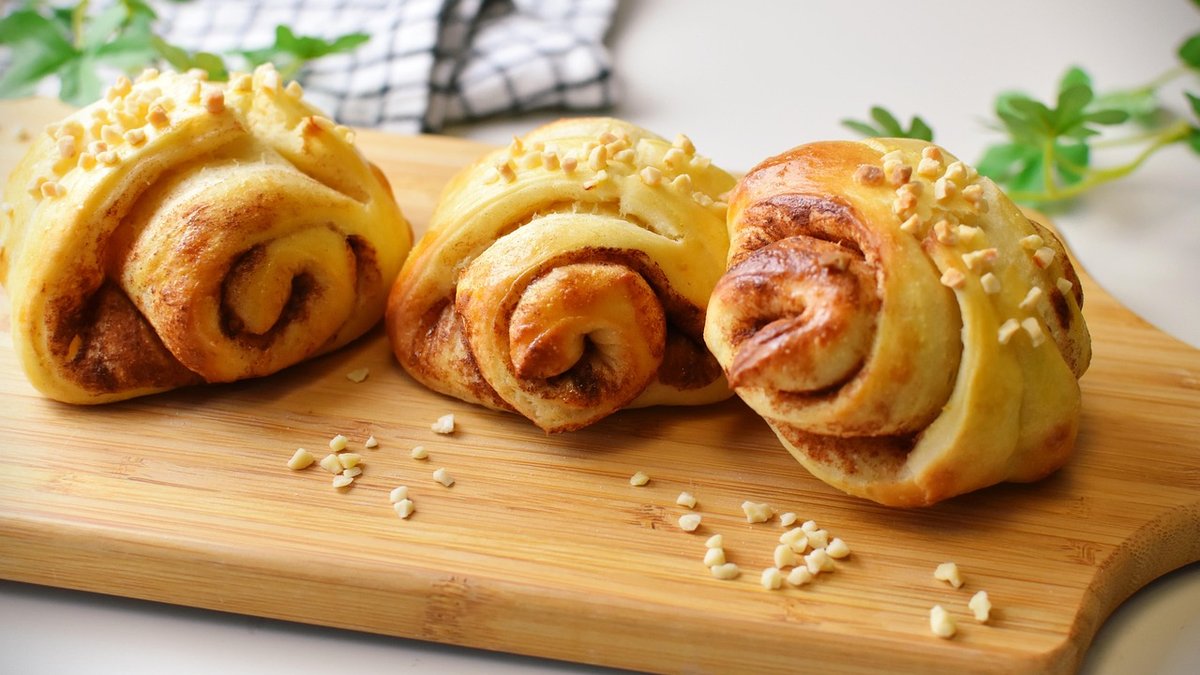
Cold weather changes the way dough behaves, so give yourself a head start. Bring eggs, butter and milk out of the fridge half an hour before you begin, and warm your mixing bowl with hot water and dry it thoroughly. Yeast likes a draught-free corner and a temperature somewhere near blood heat — if the milk feels comfortably warm on the inside of your wrist, it is about right. Anything hotter will knock the life out of it.
Keep a small oven thermometer on the shelf. Domestic ovens drift, and a bake that browns too fast on top while staying raw in the middle is nearly always a temperature problem rather than a recipe one. Weigh ingredients on scales rather than guessing with cups, and if your kitchen is chilly, prove dough in the airing cupboard or on top of the fridge rather than on a cold worktop.
Nothing welcomes a frosty weekend like a tray of soft, fragrant buns, and the dough is forgiving enough for an unhurried baker.
Mix the dry ingredients, then the milk and egg, then work in the butter until the dough is smooth and slightly tacky. Knead for ten minutes by hand, or eight in a mixer, then prove covered for an hour to an hour and a half until doubled. Knock back, fold in the fruit, shape into twelve balls and nestle them into a lined tin. Prove again for forty minutes, then bake at 200°C (180°C fan, gas 6) for fifteen to eighteen minutes. Brush with warmed golden syrup while still hot, and the tops will shine like lacquer.
This is the bake that improves with keeping, which makes it ideal for a busy week. Line a 2lb loaf tin with baking parchment and butter the sides well.
Warm 100g black treacle, 100g golden syrup, 100g dark muscovado sugar and 150g butter gently until melted, then stir in 200ml buttermilk or thinned yoghurt. In a large bowl, whisk 250g plain flour with 2 tsp ground ginger, 1 tsp mixed spice, 1 tsp bicarbonate of soda and a pinch of salt. Pour the wet into the dry and beat until glossy. Bake at 170°C (150°C fan, gas 3) for fifty to fifty-five minutes, until a skewer comes out with just a few moist crumbs.
Resist cutting it warm. Wrap the cooled cake in parchment and leave it in a tin for three days — the crumb firms, the spice deepens, and it slices beautifully with a pot of strong tea.
No yeast, no kneading, and it uses up the odds and ends in the fruit drawer. Put 350g mixed dried fruit, 100g soft brown sugar and 250ml hot strong tea in a bowl overnight. The next morning, stir in a beaten egg and 275g self-raising flour with a teaspoon of mixed spice. The batter will be stiff and slightly lumpy, which is exactly right. Spoon it into a lined 2lb tin and bake at 180°C (160°C fan, gas 4) for an hour to an hour and fifteen minutes. Cool in the tin for ten minutes, then turn out. Sliced thickly, buttered generously, it is breakfast and afternoon tea in one.
Proving and baking leave long pockets of time, and these small projects use them well.
Bakes keep best in a cool, dry cupboard rather than the fridge, which dries them out and dulls the spice. Line tins with parchment, keep ginger cake and fruit loaf wrapped separately from crisp biscuits, and slice only what you need. Buns freeze well for a month; warm them through at 160°C for eight minutes and they come back to life.
When you do give a bake away, wrap it in parchment and string rather than plastic, and add a handwritten note with the date it was made. It is a small courtesy that turns a good cake into a proper gift — and in the middle of winter, that warmth travels further than the oven ever could.

Hi, my name is Anthony kuber. I am artist and fashion designer.
I love to travel and writing blogging.
Your email address will not be published. Required fields are marked *
Software Developer & Writer
Hey, I'm Diva, a developer and writer blending code and creativity. I'm driven by a deep curiosity and a relentless pursuit of excellence. Join me as I craft digital solutions and captivating stories.


