
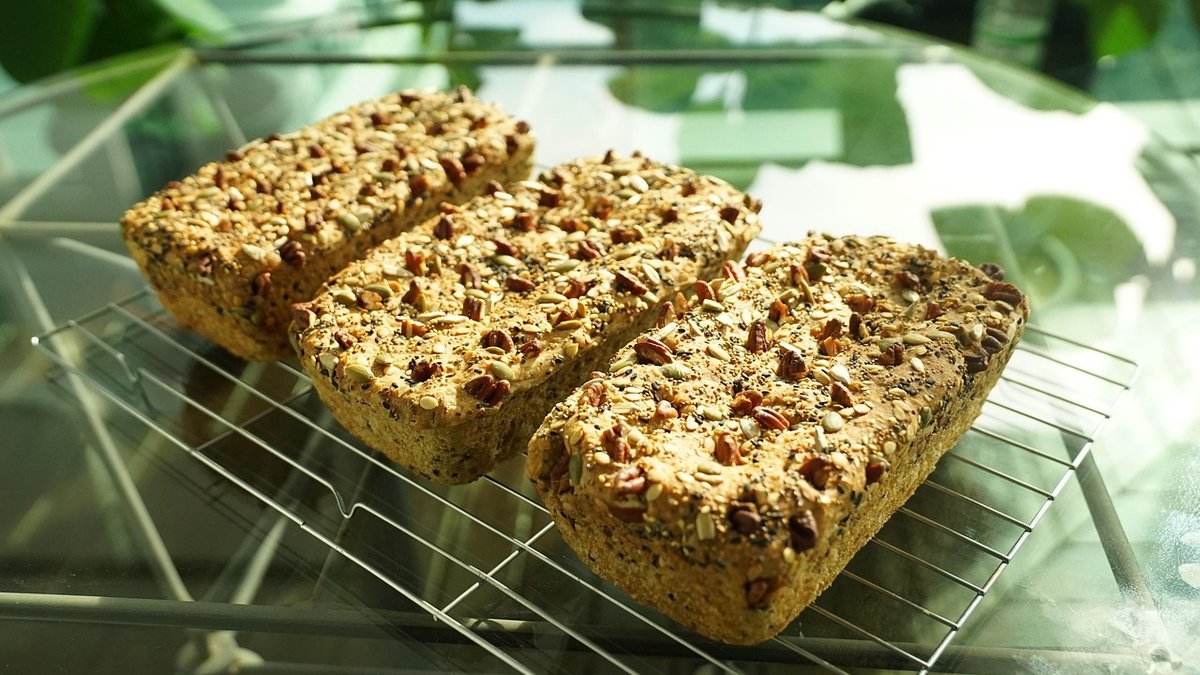
Easter baking has a character all of its own. After the plainness of Lent — the pancakes cleared away, the sugar rationed, the rich puddings set aside — the Easter kitchen is suddenly generous again. Eggs, butter and dried fruit come back to the table in force, and the scent of cinnamon, nutmeg and mixed spice drifts through the house alongside the first proper sunshine of the year.
In Britain we have a long and quietly stubborn attachment to these bakes. Hot cross buns on Good Friday, a spiced fruit loaf for the Easter tea table, marzipan in one form or another, and sweet biscuits for the children to decorate. None of it is complicated, but all of it rewards a little care.
A rich spiced fruit bread is the centrepiece of many an Easter table, and it is forgiving enough for a first attempt. The trick is to treat it like the enriched dough it is — closer to a brioche than to a plain white loaf — and to give it the time it needs.
For one large loaf, you will want roughly:
Soak the dried fruit in warm tea, orange juice or a splash of rum the night before if you can. Overnight soaking plumps the fruit so it stays soft in the bake rather than turning hard and chewy, and it stops the fruit stealing moisture from the dough.
Warm the milk to blood temperature — if you can hold your finger in it comfortably, it is about right. Rub the butter into the flour, or beat it in once the dough has come together. Mix the dry ingredients, add the wet, and knead for a full ten minutes until the dough is smooth, silky and only lightly sticky. Work the drained fruit and zest in at the end, by hand, so you do not shred it.
Leave the dough to prove somewhere warm and draught-free for one and a half to two hours, until it has roughly doubled. Knock it back, shape it into a round or a plait, place it on a lined baking tray, and prove again for about 45 minutes. For a plaited loaf, divide the dough into three ropes, plait loosely, and tuck the ends underneath.
Bake at 200°C (180°C fan, gas mark 6) for 20 minutes, then drop to 180°C (160°C fan, gas mark 4) for a further 20 to 25 minutes. The loaf should sound hollow when tapped underneath, and a probe thermometer should read around 90°C in the centre. Brush with warmed apricot jam or a sugar syrup while still hot for a soft, glossy crust, then cool on a wire rack.
Hot cross buns use much the same enriched dough, divided into twelve pieces of about 90g each, rolled tight and spaced well apart on a lined tray. The cross is simply 75g plain flour mixed with about 5 tablespoons of cold water into a thick paste, piped or drizzled across the proved buns just before they go into the oven.
Bake at 200°C (180°C fan, gas mark 6) for 18 to 20 minutes. While they are still hot, brush them with warmed golden syrup or honey for that sticky, shiny finish. Eat them split, toasted under the grill, and generously buttered — ideally the same day, though they will keep for two days in an airtight tin and freeze beautifully for up to three months.
A traditional simnel cake is a light fruit cake baked with a layer of marzipan through the middle and a second layer on top, decorated with eleven marzipan balls to represent the faithful apostles. Bake it low and slow — around 150°C (130°C fan, gas mark 2) for two to two and a half hours — and give it a few minutes under a hot grill to just catch the top.
Smaller treats matter just as much. Easter biscuits, lightly spiced and studded with currants, are ideal for children to cut out and sprinkle with caster sugar. Little marzipan eggs, chocolate nests and simnel-inspired traybakes fill out the tea table without much effort.
The real pleasure of Easter baking is that it is designed to be given away. A warm fruit loaf carried next door, a box of buns for the grandparents, a slice of simnel with a cup of tea — these are small gestures that carry a great deal of meaning.
Get everyone involved where you can. Children can weigh fruit, pipe crosses and scatter sugar; older hands often know the family recipe better than any book. Set aside a morning, put the kettle on, and let the dough prove while you catch up. That, more than anything, is what these traditions are for.

Hi, my name is Anthony kuber. I am artist and fashion designer.
I love to travel and writing blogging.
Your email address will not be published. Required fields are marked *
Software Developer & Writer
Hey, I'm Diva, a developer and writer blending code and creativity. I'm driven by a deep curiosity and a relentless pursuit of excellence. Join me as I craft digital solutions and captivating stories.


